The spotlight glare hit me straight in the face. The hall held about three hundred people. I stood on the stage, wrapping up a case presentation—how, in six months, we took a regional chain into the top tier.
In the third row, someone suddenly sat up straight.
Kira.
She stared at me as if I’d materialized out of thin air. Her face went white. Her mouth fell slightly open.
I paused. Smiled.
“Thank you for your attention. Questions—afterward.”
Applause. I stepped off the stage.
Six years ago, I worked as a sales clerk in a bookshop on the outskirts of town. Ten-hour shifts, almost no customers, a miserable paycheck. But I liked it—quiet, the smell of paper, the chance to read.
At first I read whatever. Then I stumbled onto a shelf of business books: Marketing Without a Budget, The Psychology of Selling, How to Launch a Project from Scratch. I read and felt something waking up inside me.
I started a notebook. I wrote down goals: “Become self-employed. Find clients. Open a company. Buy an apartment downtown.”
At home I kept quiet. My husband Misha would come back, eat, collapse on the couch. We didn’t fight—we just lived side by side like roommates in a shared flat.
And then his sister would show up.
Kira appeared without calling. She’d burst in with shopping bags, in a suit and high heels. A manager at a construction firm. She considered herself successful. Me—nobody.
“Mishenka, how are you?”
She’d kiss her brother as if he’d just come back from a wrestling match.
“Fine, Kir.”
“And you, Vera—still in your little shop?”
She said it like she was talking about a dumpster.
“Yes.”
“Haven’t you thought about something serious? My brother deserves a wife with a career, not a girl behind a counter.”
Misha stayed silent. Nodded. Poured her tea.
I sliced bread and stared at the knife.
One day Kira came in without warning. Sat at the kitchen table scrolling her phone. My notebook was lying there—I’d forgotten to put it away.
She saw it. Picked it up. Opened it. Read it out loud, laughing:
“‘Register as self-employed. Start my own business.’ Mish, did you hear? Vera’s a businesswoman now!”
Misha came out, looked at the notebook, and smirked.
“Well, it doesn’t hurt to dream.”
Not “good for you.” Not “give it a try.” “It doesn’t hurt to dream.”
Kira snapped the notebook shut and tossed it back onto the table.
“Verochka, let’s be realistic. Business takes education, connections, money. You don’t have any of that.”
I took the notebook and went into the other room. After that, I showed it to no one.
A month later I registered anyway. I found an ad—one café was looking for someone to run their social media. I wrote them, sent samples. They hired me.
Misha found out by accident—he saw a transfer notification.
“You’re doing something else too?”
“I’m moonlighting. Running social media.”
“Seriously?”
He frowned.
“You sure that’s normal? You don’t know what you’re doing.”
“I’ll figure it out.”
“Vera, I don’t want you embarrassing yourself. What if it doesn’t work and everyone finds out?”
“Embarrassing yourself.” Not “taking a risk.” Not “trying.”
That’s when I understood: he was on his sister’s side. He always had been.
I left six months later. Not after a scandal—just because I realized I didn’t exist there anymore.
By then I had three clients. I worked at night. Misha watched shows; I sat at the laptop. We didn’t talk.
One day he said:
“That’s enough of the internet. You’re exhausted. Quit it—focus on a real job.”
“This is a real job.”
“Vera, don’t be ridiculous. You’re sitting up all night for pennies. Kira’s right—you’re wasting your time. And mine too.”
“Kira’s right.”
I stood up, went into the room, pulled out a bag, and started packing.
“What are you doing? Offended?”
“No. I’m leaving.”
“Where to?”
“Doesn’t matter. Just not here.”
He went quiet. Then:
“You’re making a mistake. You still won’t manage on your own.”
I closed the door. I didn’t look back.
I rented a room in a communal apartment. Twelve square meters, shared kitchen, linoleum. I worked even more—bookshop by day, orders by night. Four hours of sleep.
But something new appeared inside me. Anger. Cold, quiet. It didn’t burn—it pushed.
Eight months later, I quit. I had so many clients I couldn’t keep up. I registered an LLC. I hired a designer—we worked on commission, sitting in a tiny rented room, drinking instant coffee, building presentations till morning.
I understood the main thing: you don’t sell a service—you sell a solution. People don’t come for “texts.” They come because they want their business to start working.
A year later we rented an office. Tiny, secondhand furniture. But with a sign: “Marketing Agency.” Mine.
Three years after that—twenty people on the team, major clients, federal brands. I bought an apartment downtown—panoramic windows, a river view. Then a car—a black convertible.
Not because I dreamed of it. Just because I could.
Misha wrote once—three years later: “Heard things are going well for you. How are you?” I didn’t answer.
Kira stayed somewhere back there, in the past. Along with that kitchen and the word “little shop.”
They started inviting me to conferences—first as a listener, then as a speaker. I presented cases, shared experience.
And today—main stage at the regional business forum. I’m talking about a failed project we salvaged. About how we convinced a client to trust us.
And I see her. Third row. With a notebook, but she isn’t writing. She’s staring at me. Face white.
I finish. Applause. I step off the stage.
People came up—asked for contacts, offered projects. I handed out business cards, nodded, smiled.
Out of the corner of my eye I saw Kira by the wall. Waiting.
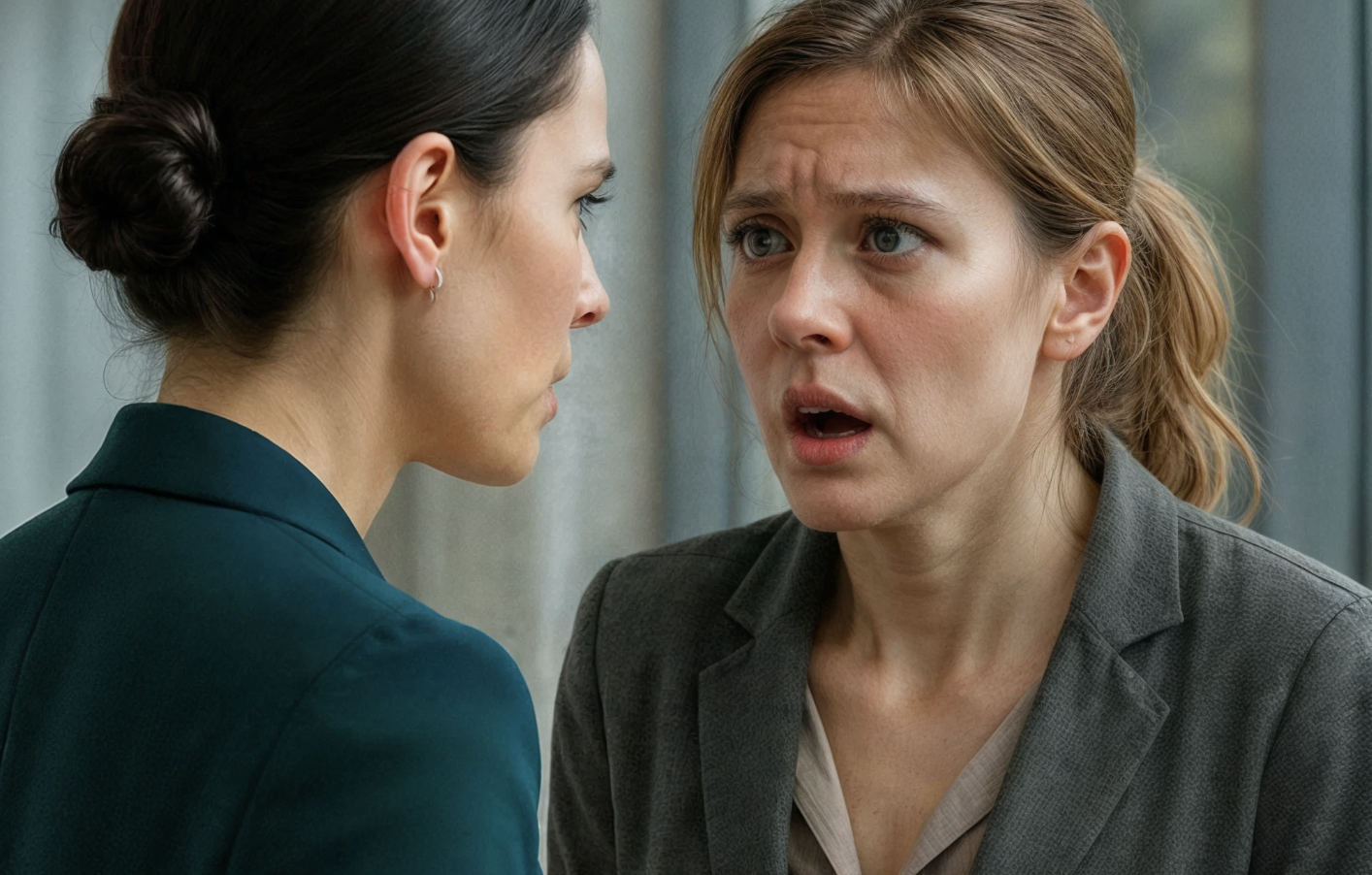
When everyone had dispersed, she stepped up to me. Her smile was stretched too tight.
“Vera? Is that really you?”
“Yes.”
“I didn’t expect it. You’ve changed so much. I didn’t recognize you at first.”
I stayed silent. Looked at her calmly. She wore a gray business suit.
Only it was old and worn. Her face looked tired.
“Listen… I’ve wanted to get in touch for a long time. I just didn’t know how to find you. You left so abruptly back then. Misha, by the way, asked about you.”
“Really?”
“Anyway, never mind. Vera, I have something. Something serious. We’re looking for a contractor—we need a marketer. Urgently. Management isn’t happy, I’m responsible for the project, and I need someone reliable. I immediately thought of you.”
She spoke quickly, stumbling over her words. Her hands kept worrying the strap of her bag.
“You see, the budget isn’t huge, but it’s a good project. And I thought—well, we’re practically family. Maybe you could give us a discount? Like… for relatives?”
I took out my phone, opened our price list, and held the screen out to her.
“Our terms. Standard contract—this amount. No discounts.”
Kira looked at it and went even paler.
“Are you serious? That much?”
“Yes. Market rate.”
“But we—”
I put my phone away and met her eyes.
“Or try doing it yourselves. People say it’s not hard—just take and start. The main thing is not to embarrass yourself in front of management.”
A pause. She opened her mouth. Closed it. Her face flushed.
I added quietly:
“And about family. We’re strangers.”
I turned and headed for the exit.
I stopped by a window in the corridor. Twentieth floor, the city below lit up.
Behind me—footsteps. Fast, sharp.
“Vera, wait!”
Kira. Face red, breathing ragged.
“Why are you like this? I didn’t mean to offend you. I just thought we’d come to a normal agreement.”
“We did. I named the price.”
“It’s not about the money!”
Her voice cracked; she glanced around and lowered it.
“It’s just… you’ve changed so much. You used to be different.”
“How?”
“Simpler. Quieter. Normal.”
“You mean ‘convenient,’ right?”
Silence. Then:
“You know, Misha was right. You’ve become tough. Cold. You used to be good.”
“And now I don’t let people wipe their feet on me.”
Kira clenched her fists.
“You think you’re better now? Because you’ve got money and a car? You’re the same. Just with swagger.”
I stepped closer and looked her straight in the eye.
“Maybe. But I was on stage. And you came asking for a discount. Feel the difference?”
She turned and walked away without looking back.
A month later, a former coworker from the bookshop called:
“Vera, you won’t believe who I saw. Remember Kira? She got a job here. As a sales clerk. In that same shop.”
I said nothing.
“Got fired, she says. The project failed, they pinned it all on her. Now she’s behind the counter. Snaps at customers, tells everyone, ‘It’s temporary.’ Yeah, sure—temporary.”
I hung up and went to the window in my office.
Justice exists. It just doesn’t come right away.
That evening at home I opened a desk drawer and took out that notebook—the same one.
I flipped through the pages. Everything crossed off. Everything done.
The last entry read: “Prove that I can.”
I picked up a pen and crossed it out.
No need to prove anything to anyone anymore.
I closed the notebook and put it back. Not to throw away—to keep as a reminder of that girl from the bookshop. She made it.
The next day I was driving back from a client meeting. Stopped at a red light.
Across the street, by a bus stop—Kira. In an old jacket, a bag over her shoulder. Waiting for the bus.
She lifted her head. Our eyes met.
I didn’t look away. I just watched.
She looked away first.
The light turned green. I drove on.
That evening I checked my email. New inquiries, client messages, offers.
One was without a subject. Sender: Misha.
“Hi. Heard you’re doing really well. Kira told me. I’m glad. Truly. Sorry if anything wasn’t right. Maybe we could meet? Talk.”
I read it. Closed the email.
Didn’t reply. Didn’t delete it. Just left it there—let it hang. Some people wake up too late.
That night I couldn’t sleep. I stood by the window—my apartment dark, only city lights beyond the glass.
I thought about the path. About the bookshop, about that kitchen where Kira read my notebook out loud. About Misha saying, “You still won’t manage on your own.”
I did.
Not for them. For myself.
And now I’m standing here, in my apartment, in my life. With no past on my shoulders. No notebook full of proof. No anger.
I’m just living. Moving on.