I was standing on the threshold of the apartment where my entire childhood had passed, and I couldn’t believe the key in my hand was the last one. My husband kept insisting that selling my inheritance was the only way to save his life. I believed him, handed over every last penny, and a week later the truth caught up with me in the most unexpected place, forcing me to look at my life through completely different eyes.
I looked at my husband, and my heart tightened with pity. Gleb sat on the couch with his head in his hands, his shoulders trembling slightly. I had never seen him so lost.
“Marinka, you understand… this is it… the end,” he whispered without lifting his eyes.
“Gleb, stop! The doctors said there’s a chance. The surgery… Yes, it’s expensive, but we’ll figure something out!”
“What are we going to figure out?” He jerked his reddened eyes up at me. “What? No one will give us a loan like that! We’ve already got a mortgage hanging over our one-bedroom! Ask our parents? Mine have pennies, and your mom can barely make ends meet.”
He was right. The amount the German clinic named for a heart operation was astronomical for us. A rare defect that had shown up suddenly and aggressively.
“But there has to be a way out!” I sat down beside him and took his hand. His hand was icy.
Gleb was silent for a moment, then looked at me with a gaze that made everything inside me go cold.
“There is a way out, Marisha. One.”
I already knew what he was going to say. The thought had been hovering in the air ever since my grandmother died. Three months ago, I inherited her three-room apartment in a Stalin-era building in the city center. “The family nest,” Grandma used to call it.
“No, Gleb. Not that,” I shook my head, feeling a lump rise in my throat. “You know I promised Grandma…”
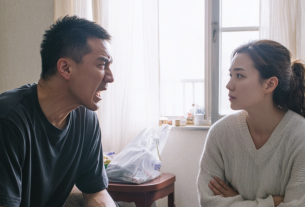
“You promised!” He sprang up, yanking his hand away. “And what did you promise me? In sorrow and in joy, in sickness and in health! Or were those just words? So my life isn’t worth your promises to a dead woman?”
“Don’t say that! That’s not fair!” Tears burst from my eyes. “It’s my memory!”
“Memory? And I’m about to become a memory myself! Would you like that better? You’ll sit in that apartment and remember how you could have saved me—but didn’t!”
His words hit like a whip. I looked at his gaunt face, the panic in his eyes, and I felt like a traitor. He was right. What were walls compared to the life of the man I loved?
“I’m sorry,” I whispered. “I’m sorry, I didn’t think. Of course we’ll sell it.”
He instantly softened, walked over, and wrapped me in a tight hug.
“Marinochka, my sunshine, I knew you loved me. We’ll sell it, I’ll get treated, and then we’ll earn enough for a new one—an even better one! Just imagine how we’ll live!”
He was already smiling, making plans, while I stood in his arms feeling as if a piece of my soul was being torn out. I didn’t yet know it was only the beginning of my nightmare.
Finding a realtor turned out to be easy. Gleb immediately got busy and said his buddy had a “trusted person.” But for some reason I didn’t want to entrust something so important to a random stranger. And then I remembered: Andrey.
Andrey Kovalyov—my first college love. A quiet, intelligent guy with unbelievably serious eyes. We’d been together for almost a year, and then I met Gleb—bright, loud, like fireworks. And I, idiot that I was, left for Gleb, breaking Andrey’s heart.
I’d heard from mutual acquaintances that Andrey had become a top lawyer, opened his own firm—real estate deals, no less. Finding his number wasn’t difficult.
“Hello,” a familiar voice answered—deeper now, more confident.
“Andrey? Hi. It’s Marina. Marina Androsova—do you remember me?” I nervously tugged at the hem of my T-shirt.
There was silence on the line for a few seconds. It felt like an eternity.
“I remember,” he finally said. His tone was even, emotionless. “Did something happen?”
Haltingly, stumbling over my words, I told him about Gleb, about the illness, about having to sell the apartment urgently.
“I need the best. I need someone I can trust. I thought of you.”
“I see.” Another short pause. “Fine. Come to my office tomorrow, we’ll look at the documents. I’ll text you the address.”
He spoke so coldly and distantly, as if we’d never even known each other. I felt uneasy. Maybe I shouldn’t have called.
The next day I sat in his sleek office with panoramic windows. Andrey had hardly changed—he’d just grown more mature, faint lines had appeared at the corners of his eyes, and an expensive suit fit him perfectly.
“So,” he said, reviewing the documents I’d brought. “The apartment is clean, you’re the sole owner. That simplifies things. A quick sale means you’ll have to уступить (take a bit less) on price. Are you ready for that?”
“Yes. I’m ready for anything,” I nodded. “Time isn’t waiting.”
“I understand.” He lifted his serious eyes to mine, and for a second something like sympathy flickered in them. “I’ll do everything I can to find a buyer as quickly as possible and on the best terms for you.”
“Thank you, Andrey. I owe you.”
“No,” he gave a barely noticeable shake of his head. “It’s just my job.”
As soon as I left his office, Gleb called.
“Well? How did it go? Did he take it?”
“Yes, everything’s fine. He said he’ll handle it.”
“Great!” There was so much joy in his voice. “You’ll see, Marinka, everything’s going to work out! Soon everything will be good!”
But inside, cats were clawing at my chest. I was betraying Grandma’s memory and felt terrible—but I pushed those thoughts away. The main thing was saving Gleb. Everything else didn’t matter.
“We need high-quality photos,” Andrey said over the phone. “I’ll come with a photographer tomorrow. Be there.”
The next day we met by the entrance of Grandma’s building. Andrey wasn’t alone. Next to him stood a guy with a huge backpack full of equipment.
“This is Stas, our photographer. He’ll do everything in the best way.”
I opened the door with my key. The apartment smelled like Grandma—a mix of lavender, old books, and something untraceably familiar. I swallowed the lump rising in my throat.
While Stas set up tripods and flashes, Andrey slowly walked through the rooms. He stopped at the bookcase and ran his hand over the spines.
“I remember this shelf. You and I even argued about some book from here.”
“About The Master and Margarita,” I smiled. “You said it was a novel about cowardice, and I said it was about love.”
“Looks like we were both right in our own way,” he said quietly without looking at me.
We went into the kitchen. The sun flooded it with light, playing off the old but perfectly clean tile.
“And here your grandma poured me tea with cherry jam,” Andrey smiled at the memory. “And kept asking if my intentions were serious.”
“She adored you,” I admitted. “She always said, ‘Andryusha is reliable. With him you’ll be like behind a stone wall.’”
As soon as I said it, I bit my tongue. Andrey turned to me. We were standing very close. His gaze warmed, becoming the way it used to be—deep, piercing.
“And you didn’t choose a wall,” he said without reproach, with a faint sadness. “You chose fireworks.”
“I was young and stupid,” I breathed, unable to look away.
He stepped even closer, lifted a hand, and touched a loose strand of hair that had slipped out of my updo. My heart skipped—then started pounding like crazy. It felt like he was about to kiss me. I froze, not knowing what I wanted more: for him to do it, or to step back.
“Alright, I’m ready to shoot the living room!” the photographer shouted from the other room.
The moment shattered. Andrey pulled away, his face turning unreadable again.
“Let’s go. We won’t get in his way.”
For the rest of the hour while the shoot went on, we barely spoke. But I constantly felt his eyes on me. After they left, I sat for a long time on the old sofa with my arms wrapped around my knees. His cologne hung in the air, mixed with the smell of my childhood. And I felt bitter and ashamed to the point of tears—ashamed before Gleb, before Grandma’s memory, and before myself.
Andrey kept his word. A buyer was found in three days: an older couple who liked the quiet center and the solidity of the Stalin-era building. They barely negotiated.
“They’re ready to pay a deposit as soon as tomorrow,” Andrey told me. “The deal will take about a week.”
Gleb was over the moon. He immediately called the clinic and agreed on a hospitalization date.
“I found a specialist who’ll accompany me, arrange everything on site,” he said excitedly. “Professor Solovyov. He’s a star! He’s flying to Germany for a congress and will take me under his wing.”
On the day of the deal I was in a fog. I signed papers Andrey handed me without really reading them. When a huge sum landed in my account, I didn’t feel joy—only emptiness.
That evening we were supposed to meet Professor Solovyov to hand over the first part of the money for treatment. He scheduled the meeting at an unremarkable café.
The professor turned out to be a fussy man in his fifties with darting eyes and an unpleasant smile. There was a faint smell of alcohol on him.
“Yes, yes, your husband’s case is not easy, but we’ll manage,” he said, quickly flipping through the medical records Gleb had brought. “The main thing is not to lose time.”
They drew up some kind of contract, Gleb signed it. I transferred an impressive sum to the account they gave—half the cost of the operation.
“Well then, I’m taking the patient,” the professor said, placing a possessive hand on Gleb’s shoulder. “We still need to discuss the flight preparation details. And you, Marinochka, go home and rest.”
“Gleb, I’ll wait for you,” I asked.
“Sweetheart, no need. It’ll take a long time, it’s boring. Go, I’ll be back soon.”
He kissed me, and in his eyes I saw relief. I drove home with a heavy heart. I didn’t like that professor at all. There was something repulsive and fake about him. But I blamed it on my frayed nerves.
Two days later Gleb was flying out. I saw him off at the airport, swallowing my tears.
“Just don’t worry,” he said, hugging me. “You’ll transfer the second part to the same card as soon as I call from the clinic. I love you.”
“And I love you. Come back soon. Healthy.”
He headed into security, waving goodbye. I watched him until he vanished into the crowd. And in that moment a chilling loneliness and foreboding hit me so hard I almost couldn’t remain standing.
A week passed. Gleb called once, said he’d arrived fine and was settling in. His voice sounded чужой—foreign. When I asked about how he felt and the doctors, he gave short answers and blamed a bad connection.
I sat in our mortgaged one-bedroom, which now felt empty and echoing. Grandma’s apartment was already occupied by new residents. I felt as if I’d lost everything—both my past and my future.
To distract myself, I went for a walk. I wandered aimlessly until my feet carried me back to the neighborhood where we’d met the “professor.” I entered the first coffee shop I saw, but it was loud, so I left. Nearby was a door with an inconspicuous sign: “Anchor Bar.” During the day it was almost empty. I took a seat by the window and ordered a coffee.
At the next table, a scruffy man was loudly, drunkenly bragging to his drinking buddy.
“…and I’m like, with a serious face, ‘Your case is complicated, but we’ll handle it!’ Ha! And that hen of his, the wife, stares at me, blinks her eyes, believes everything!” he bellowed with laughter.
My heart lurched. The voice sounded familiar. I cautiously turned my head—and went numb.
It was him. Professor Solovyov. Only now he wasn’t in a suit—he was in a greasy T-shirt, with a swollen red face.
“Can you imagine, Fedya, they handed me a million and a half!” the “professor” kept boasting. “Glebka’s a miser, promised two hundred thousand but gave only a hundred. Still, not bad for a couple hours of ‘work’!”
He pulled out his phone and started showing something to his friend.
“Look, here’s us already in Turkey! He’s relaxing, the bastard, with his mistress, and he wouldn’t even give me my full cut! Says the rest later. I know those ‘laters’!”
I saw his phone screen. In the photo, a smiling, absolutely healthy Gleb was hugging some blonde on a beach. In the background, a hotel could be seen.
The ground fell away beneath me. I couldn’t breathe. Coffee, the bar, drunken voices—all blended into one buzzing swarm. My ears rang. It was all a lie. The illness, the operation, the professor… and Gleb.
I don’t remember how I ran outside. My hands shook so badly I could barely pull out my phone. One number in my contacts: Andrey.
“Andrey…” I croaked into the phone, choking on sobs. “Andrey, please come… Please…”
Andrey arrived in fifteen minutes. I was sitting on a bench outside the bar, shaking violently. He jumped out of the car, ran to me, and draped his jacket over my shoulders.
“Marina, what happened? You look terrible!”
Through tears I told him everything: the drunken “professor” in the bar, the photo, Gleb with his mistress in Turkey.
Andrey listened in silence. His face grew harder and harder, and an icy glint appeared in his eyes.
“Alright. Calm down,” he took my face in his hands and made me look at him. “Do you hear me? The most important thing now is to calm down and act. Are you ready?”
I nodded, wiping my tears. His confidence was contagious.
“Is that man still in the bar?”
“Yes… I think so…”
“Excellent. Sit here. Don’t go anywhere.”
He turned and walked decisively into the bar. Through the glass I watched him approach that table and say something short and commanding to the “professor.” The man started to protest, but Andrey showed him something on his phone, and the actor immediately deflated, nodding as he obediently went with him.
They came outside. Seeing me, the “professor” shrank.
“I’m not to blame… He made it up… He forced me…” he babbled.
“Quiet,” Andrey cut him off. “You’re coming with us. And you’re going to tell everything—as it was. At the police station.”
We got into the car. On the way to the station Andrey called someone and briefly outlined the situation. His voice was steel. I understood Grandma had been right. This wasn’t just a wall. It was a cliff.
At the police station, the “professor,” who turned out to be an unemployed actor named Myshkin, broke quickly. He laid out the whole scheme Gleb had invented: staging an illness, finding a “doctor” through mutual acquaintances, siphoning off the money. He even handed over the cash he still had and wrote a full confession in exchange for cooperating with investigators.
“Now Gleb,” Andrey said as we left the station. “This is fraud on a particularly large scale. The moment he flies back, they’ll be waiting for him. We’ll get the money back—at least part of it.”
“And the apartment?” I asked hopefully.
“The apartment is harder,” Andrey frowned. “The sale was legal. You signed everything yourself. But I’ll think of something. I’m a lawyer.”
He drove me home and made me drink hot tea.
“You need rest. I’ll keep you updated. And Marina… don’t blame yourself. You just loved.”
When he left, for the first time in many days I felt not despair, but a quiet, fierce determination. I wasn’t a victim anymore. They had awakened something in me that I’d forgotten I even had.
The next two weeks felt like delirium: filing for divorce, meetings with the investigator, calls from mutual friends who couldn’t believe what had happened. Andrey was constantly in touch—solving legal issues, supporting me.
He found a way to challenge the deal. It turned out that at the time of the sale I had been in a state of emotional shock caused by deliberate deception about my husband’s supposedly fatal illness. It was a complicated legal construction, but Andrey clung to it with a death grip. He found witnesses who confirmed my depressed state and attached Myshkin’s testimony.
Gleb and his girlfriend were detained right at the airport—tanned and happy. When he saw me during questioning, he didn’t even show remorse.
“Marinka, what’s wrong with you? I was doing it for us! I wanted to fix our life! I messed up—who hasn’t? You’ll forgive me, right?”
I looked at this чужой, pathetic man and felt nothing but disgust.
“No, Gleb. I won’t forgive you. Ever.”
The court hearing to annul the apartment sale took place a month later. The new owners, an elderly couple, turned out to be decent people. After learning the whole story, they didn’t dig in their heels and agreed to cancel the contract on the condition that their money was returned in full. Thankfully, the money was seized from accounts belonging to Gleb and his mistress.
That day, when I received the court decision and the new documents for the apartment, I cried with happiness. I stood by the window in Grandma’s apartment—mine again—and looked out at the city.
That evening Andrey came over. He brought a bottle of champagne.
“To victory,” he said, handing me a glass.
“To our victory,” I corrected him. “Without you I wouldn’t have managed.”
We sat in the kitchen for a long time, talking about everything and nothing. At one point he took my hand.
“Marin, I know it’s probably not the time… but I can’t stay silent anymore. All these years, I’ve thought about you. When you called, I was angry at first. Then I realized it was a chance—a chance to fix everything.”
He looked at me with those serious, honest eyes.
“Grandma said with you I’d be like behind a stone wall,” I smiled through tears. “She was right.”
“Then maybe we could try to build something behind that wall?” he asked softly.
I didn’t answer. I just leaned forward and kissed him. It was the kiss I’d been waiting for for ten years.
A few months passed. Gleb got a real prison term. I was free. Andrey and I were renovating Grandma’s apartment, turning it into our little nest.
This morning, the test showed two lines. Andrey doesn’t know yet. I want to tell him tonight—right here, within these walls where Grandma’s love once lived, and where ours is now being born.
And would you be able to forgive a betrayal like that for the sake of keeping a family?